





Why is professional air humidification in hospitals important, and what is it used for? Discover how optimal humidity levels help to reduce infections, protect expensive medical equipment, and ensure reliable planning. Today, air humidification systems are an integral part of modern building services engineering—particularly in hygiene-sensitive environments such as hospitals, medical laboratories and research facilities. For building planners and hospital operators, they represent a critical interface between hygiene, energy efficiency, operational reliability and regulatory compliance.


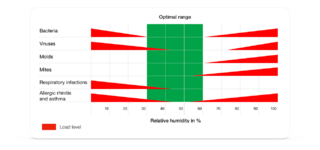
The optimal range is 40–60% relative humidity
As numerous studies and standards indicate, the optimal range is between 40–60% relative humidity. But why exactly does the ideal humidity level fall within this range, and what does this mean in practice for the planning and operation of a hospital?
The following seven points provide an initial overview and offer clear answers.
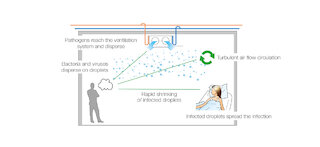
Figure 1: High transmissibility at RH < 40%
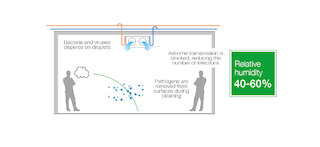
Figure 2: Significantly reduced transmissibility at 40% < RH < 60%

Isothermal humidification (steam)
✅ very high level of hygiene safety
✅ often required (e.g. in operating theatres)
✅ high degree of flexibility in adaptation

Adiabatic humidification (atomisation)
✅ very energy-efficient
✅ suitable for handling large volumes of air
✅ potential additional cooling effect
We have provided many additional resources for the professional planning of air humidification in HVAC (AHU) systems in our HY Planners' Guide. Would you like to have the key information on air humidification quickly and clearly at your fingertips? Then download the HumiGuide app free of charge.
Conclusion for planners and hospital operators
regarding air humidification
Air humidification in hospitals is a key parameter for:
-
- infection prevention
- operational reliability of medical equipment
- energy efficiency and cost reduction
- regulatory compliance and future-proofing
The target range of 40–60% relative humidity brings together all requirements in a technically sound optimum.
Practical conclusion:
Humidification must be considered at an early planning stage and consistently integrated into operations – as an integral part of hospital infrastructure.
For further information, please do not hesitate to contact us.
We will be pleased to advise you.

You can find the detailed white paper on the topic of ‘Air humidification in hospitals’, which includes numerous links, sources and studies, here:


Patrick Brußat
Hygiene & Compliance Manager and
Product Manager Adiabatic Systems, HygroMatik